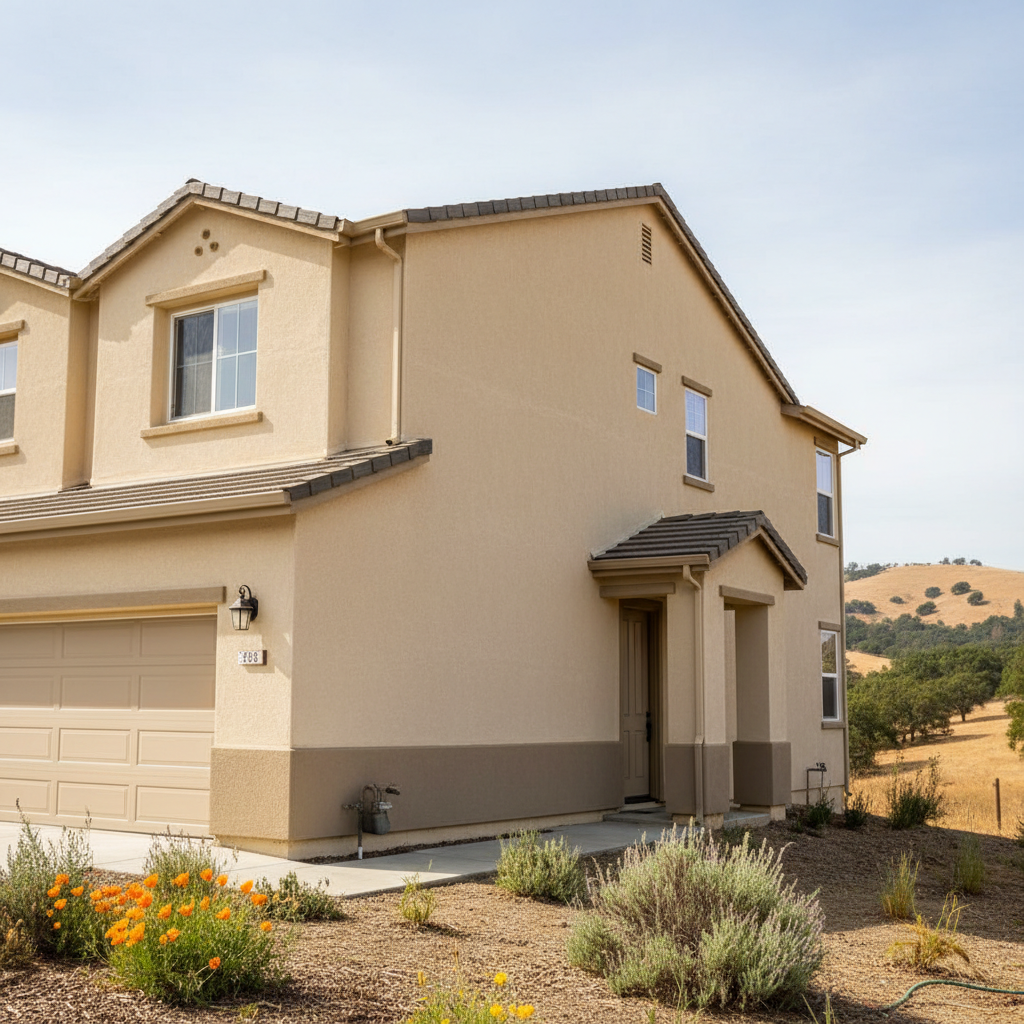
So, you're thinking about EIFS for your home right here in Antioch? That's a smart move for a lot of folks. It's a great system for insulation and really boosts curb appeal. But let's be honest, the first thing on most people's minds is, "How much is this actually going to cost me?" It's not a simple, one-size-fits-all answer, but I can give you a pretty good idea of what to expect. After all, I've been doing this work for years, right here in our community.
What Exactly Is EIFS, and Why Does It Cost What It Does?
First off, EIFS stands for Exterior Insulation and Finish System. It's not stucco, even though it can look an awful lot like it. The big difference? EIFS has an insulation board tucked away beneath the finish coat, which makes your home way more energy-efficient. That insulation is a big part of the cost, sure, but it also saves you money on your utility bills down the road. You're paying for a high-performance system, not just a pretty face.
When we talk about pricing EIFS, we usually quote it by the square foot. But don't just look at that number by itself. There are a bunch of things that can push that per-square-foot price up or down. Think about it like buying a car – a basic model costs less than one loaded with all the bells and whistles, even if they're both the same make.
The Big Factors That Affect Your EIFS Quote
Here's what I look at when I'm putting together a bid for an EIFS job:
- Total Square Footage: This one's pretty obvious, right? A bigger house means more materials and more labor. Simple as that.
- System Type (Drainage vs. Barrier): This is a really important one. A barrier EIFS system is generally less expensive upfront because it's simpler to install. However, a drainage EIFS system, which is what I recommend for most homes around here – especially with our occasional heavy rains – costs more. It includes a drainage plane behind the insulation board to manage any moisture that gets past the finish coat. It’s a smart investment for long-term protection, particularly if your home is in an area prone to settling, like some of the older neighborhoods near the river.
- Architectural Complexity: Does your house have a lot of corners, arches, columns, or intricate details? Every bump, curve, and cutout adds labor time and requires more careful cutting and fitting of materials. A simple, flat wall is much quicker and cheaper to cover than a house with a lot of jogs and architectural features.
- Condition of Existing Substrate: What are we putting the EIFS over? If it's a clean, flat surface, great. If we have to remove old siding, repair damaged sheathing, or prep an uneven surface, that's going to add to the cost.
- Scaffolding and Access: Is your house two stories, three stories? Is the terrain around it sloped? The higher we have to go, and the more difficult it is to set up scaffolding safely, the more time and equipment that takes, and that gets factored in.
- Finish Texture and Color: Standard textures and colors are usually included. But if you want a custom color match or a very specialized, intricate texture, that might mean additional costs for materials or specialized application techniques.
- Location and Site Logistics: While we're talking Antioch, even within the city, some sites are tougher to work on. Is there easy access for material delivery? Is there space for a dumpster and equipment? Tight spaces or difficult access can add to labor time.
Typical EIFS Cost Ranges in Antioch, CA
Alright, let's get down to some numbers. Keep in mind these are ranges, and your specific project could fall outside them depending on those factors I just mentioned.
For a standard barrier EIFS system on a relatively simple home, you're generally looking at anywhere from $8 to $12 per square foot. This is for the EIFS application itself, not including any extensive prep work or demolition.
Now, for a drainage EIFS system, which is what I push for because it's just better protection, you're usually in the range of $12 to $18 per square foot. Again, this is for the EIFS application. If you have a highly complex home with lots of architectural details, multiple stories, or significant prep work needed, that price can climb towards the higher end of that range, sometimes even pushing past $20 a square foot for really intricate jobs.
So, for an average 2,000 square foot single-story home with a moderately complex design, you could be looking at anywhere from $24,000 to $36,000 for a drainage EIFS system. A smaller, simpler home might be closer to $16,000 to $24,000. Not a small chunk of change, I know.
What Should Be Included in Your Quote?
When you get a quote from Antioch Stucco & Plastering, or any other reputable contractor, it should be pretty detailed. Here's what you should expect to see:
- Square footage of the EIFS application.
- Type of EIFS system being installed (barrier or drainage).
- A detailed breakdown of materials: Insulation board, base coat, mesh, primer, finish coat, sealant, flashing, etc.
- Labor costs.
- Prep work: This includes things like cleaning the substrate, minor repairs, or sealing existing openings.
- Scaffolding and equipment rental.
- Waste removal and cleanup.
- Warranty information: Both for the materials and the workmanship.
- Payment schedule.
Make sure there are no hidden fees. A good contractor will lay it all out for you upfront.
How to Avoid Overpaying and Get a Fair Deal
You don't want to get ripped off, and I certainly don't want to see my neighbors get ripped off either. Here's how to protect yourself:
- Get Multiple Quotes: This is a no-brainer. Get at least three detailed bids. Don't just pick the cheapest one, though. Compare what's included in each.
- Ask for References: A good contractor will have plenty of happy customers. Call them up, ask about their experience.
- Check Licenses and Insurance: Make absolutely sure the contractor is licensed (CSLB license for stucco/plastering is C-35) and fully insured. You don't want to be liable if someone gets hurt on your property.
- Understand the Scope: Read the quote carefully. If something isn't clear, ask. Don't assume anything.
- Don't Pay in Full Upfront: A reasonable down payment is standard, usually 10% or a maximum of $1,000, whichever is less, as per California law. Pay in stages as work is completed, with the final payment due only after you're satisfied with the finished job.
- Look for Experience with EIFS: EIFS isn't just like slapping on stucco. It requires specialized training and experience to install correctly, especially a drainage system. Ask about their team's experience specifically with EIFS.
EIFS is a significant investment in your home, but it's one that pays off in energy savings, durability, and a beautiful exterior. Do your homework, ask the right questions, and you'll end up with a fantastic result that lasts for decades.